 Rwanda vs Uganda Gorilla Trekking
Home › Guides › Uganda Weather for Gorilla Trekking, Month by Month
Uganda Weather for Gorilla Trekking, Month by Month
The best months for Uganda Weather on a gorilla trek are June to July and December to February, when the gorilla parks in the southwest are driest and trails are firmer underfoot. Treks run 2 to 7 hours at altitude, so dry months make the biggest difference to your day.
Quick answer Best months for gorilla trekking in Uganda
June and July are the driest months in southern Uganda where Bwindi and Mgahinga sit, so they give the firmest trails for a 2 to 7 hour gorilla trek. January and February are also warm and dry. Rain still falls at some point in almost every month near the gorilla parks.
Key takeaways
- Compare both countries on the rwanda vs uganda gorilla trekking homepage before you pick a permit
- See a full 3 day gorilla trekking safari tour in Uganda priced at $2,600 per person
- Read how a 3 day Uganda gorilla trekking and Batwa Pygmies experience fills a wet-season day at $1,860 per person
- Check the 2 day gorilla trekking Bwindi from Kigali option for a short crossing from Rwanda
When is the best time to go gorilla trekking in Uganda?
June to July and December to February are the best windows, because those are the dry seasons in the south where Bwindi Impenetrable and Mgahinga Gorilla National Parks sit.
The gorilla parks sit in the far southwest, so the southern weather pattern is the one that matters for your trek. Dry trails cut both the mud and the walking time on a trek that Uganda Wildlife Authority puts at 2 to 7 hours, with one hour of observation once you reach the family.
The two dry seasons
The south has two wet seasons, March to May and September to November. That leaves two dry windows. June and July are the driest months in the south, and December through February forms the second dry spell.
January and February tend to be the warmest and driest months of all. Permits are issued throughout the year, so you can trek in any month. The dry seasons simply make the 2 to 7 hour day more comfortable and more predictable.
| Season | Months | What it means on the trek |
|---|---|---|
| Long dry season | June, July | Driest months in the south, firmest trails |
| Short dry season | December, January, February | Warm and dry, second best window |
| Long rains | March, April, May | April is the rainfall peak in the south, muddiest trails |
| Short rains | September, October, November | Wetter on average than March to May |
Why the wet months still sell out
Mgahinga issues about 8 permits per day and Bwindi's four sectors, Buhoma, Ruhija, Rushaga and Nkuringo, each have limited daily slots. Low season means fewer trekkers on the trail and cheaper lodge rates, so some travellers deliberately choose the rains. Book permits well ahead whichever month you pick.
Source: Uganda Wildlife Authority.
What Is Uganda's Weather Like Month by Month in the Gorilla Parks?
The southwest highlands around Bwindi and Mgahinga are considerably colder than the Ugandan average, and the driest trekking months there are June and July.
National averages hide what you will actually feel on the trail. The gorilla parks sit above 1,300m, where temperatures drop noticeably from the Kampala norm of around 27C/81F in the afternoon and 16C/61F in the morning.
Month by month at the gorilla parks
Use the table as a planning tool for a Bwindi or Mgahinga trek rather than as a forecast for the whole country. Rain near Lake Victoria or in the north tells you little about your trail in the southwest highlands.
| Month | Season | Trekking conditions |
|---|---|---|
| January | Short dry season | Warm and dry, one of the best trek months |
| February | Short dry season | Warmest and driest alongside January |
| March | Long rains begin | Rain picks up, trails start to soften |
| April | Long rains | Rainfall peak in the south, hardest trekking month |
| May | Long rains tail off | Still wet, fewer trekkers on the trail |
| June | Long dry season | Driest month in the south, prime trekking |
| July | Long dry season | Driest alongside June, best trails of the year |
| August | Dry to wet transition | Generally good, rain chances rise late in the month |
| September | Short rains begin | Wet season opens, pack for rain |
| October | Short rains | Wet, but sun still out most of the time |
| November | Short rains | Slightly wetter than the March to May season on average |
| December | Short dry season begins | Rain eases, trails improve through the month |
What the numbers say
Across Uganda, average afternoons reach about 27C/81F and mornings about 16C/61F. Above 1,300m, which includes both gorilla parks, it is colder. Murchison Falls and Kidepo Valley average 32C/90F daytime, which is far hotter than anything you will meet on a Bwindi trail.
Tours That Fit
These Uganda treks run all year, so pick the month first and the tour second.
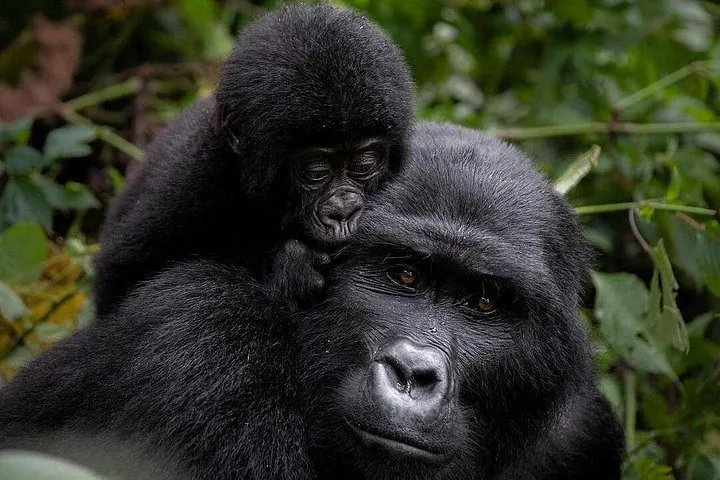
3 Days gorilla trekking Safari tour in Uganda
Private three day Uganda gorilla safari with the permit, two nights lodging, meals, a Batwa tour and a Lake Bunyonyi canoe ride for $2600 per person.
- Cancellation
- Free cancellation 24h
- Operator
- Dav Safaris
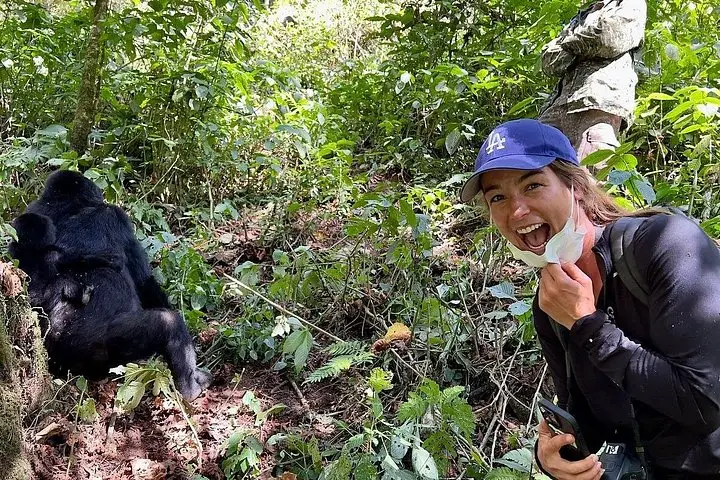
3 Day Uganda Gorilla Trekking and Batwa Pygmies Experience
A private 3 day Uganda gorilla trek with a Batwa cultural experience, permit of $800 included in the $1860 price, from Entebbe or Kampala.
- Cancellation
- Full refund 6 days ahead, 50% between 2 and 6 days, no refund within 2 days
- Operator
- Eco Adventure Safaris
How does altitude change the weather on the trek?
Gorilla treks happen at higher altitudes where it is much cooler, especially at night, so you need warm layers even in the dry season.
Uganda sits on the equator, yet elevation keeps the climate pleasant year-round, with temperatures from the low 50s to mid 80s F nationally.
Cold mornings, warm afternoons
You start at a briefing in the early morning, when it is coldest, and climb from there. Hikes in the region run at altitudes of 2,500m to 4,000m. Expect the temperature to fall as you gain height, and expect damp air in the forest even without rain.
Layer up. Waterproof clothing, long sleeves and sturdy hiking boots are the standard recommendation for the trail, and gloves help on the steep, vegetated sections.
Source: Visit Rwanda.
What does rain actually mean on the trail?
Rain in the wet seasons often falls at night and early morning, the sun stays out most of the day, and the main effect is mud and slower, longer treks.
A wet season trek is not a washout. The pattern of the rains matters more than the total rainfall figure.
The daily rain pattern
Even in the rainy seasons, rain often comes at night and in the early morning. You will meet wet vegetation, slick slopes and mud rather than hours of downpour. Waterproof boots and a rain jacket handle most of it.
Because a Uganda gorilla trek lasts 2 to 7 hours with 60 minutes with the gorillas, a muddy trail can push a short trek toward the long end of that range. Build slack into your day plan and your return travel rather than booking a tight evening connection after the trek.
Wet season versus dry season on the ground
In June and July the trails are at their firmest and the forest underfoot is easier. In April, the rainfall peak in the south, the same trail can be hard work. The reward in the wet months is quieter trailheads and greener forest, and permits are easier to find at short notice.
Source: Uganda Wildlife Authority.
How different is Uganda weather from one region to another?
The south has two wet seasons, the north has one continuous wet season from March to November, and the southwest gorilla highlands are colder than both.
Uganda is small on the map but its climate zones differ enough to change how you plan each leg of a trip.
South, north and the parks
The south, home to Bwindi, Mgahinga and Kampala, has wet seasons from March to May and September to November. The north has a single wet season running March to November and a dry season from December to February, so a northern park add-on after your trek follows a different calendar. Around Lake Victoria and in western Uganda, rain can fall at almost any time of year.
Treat a dry month as drier, not dry.
| Area | Wet season | Dry season |
|---|---|---|
| South, including Bwindi and Mgahinga | March to May and September to November | June to August and December to February |
| North, including Murchison Falls and Kidepo | March to November | December to February |
| Lake Victoria shore | Rain possible at almost any time | No clear dry spell |
Checking the forecast before you fly
For a live picture, AccuWeather carries a Uganda forecast with radar and current conditions for cities including Arua, Gulu and Busia. The UK Met Office lists current conditions for Kampala, Entebbe and Masindi around 28C. Kampala forecasts in recent days showed lows around 68F and highs around 79F with thunderstorms likely, which is typical for the lakeshore and much warmer than the trailhead at Bwindi.
Source: Met Office Uganda.
How should weather shape your trek plan and budget?
Pick a dry season month for the easiest trail, or accept the rains for fewer crowds, and price the trip with the permit bought separately from the tour.
Weather and money meet at the permit. Uganda treks run all year, so the calendar choice is about comfort, not availability.
Timing against cost
Rwanda's permit stands at $1,500 per person per day according to Visit Rwanda, and its low season discount gives 30% off from November to May for combined trips that include Akagera and/or Nyungwe. That aligns exactly with Uganda's wetter months, so the same calendar that brings mud can bring savings on a two-country trip. Uganda permit prices are not stated in the sources used here, so ask your operator for the current figure.
If you trek from Kigali rather than Kampala, a Bwindi gorilla trekking from Kigali itinerary puts you at the trailhead faster and keeps more of the day free after the trek.
A sample wet season day
On a 3 day Uganda itinerary, day 2 is the gorilla trek and day 3 is often the Batwa Cultural Experience before the return journey. If the trek morning is wet, the afternoon village visit usually stays dry, because the rain pattern favours clear daytime hours even in the wet seasons. Treks can run anywhere from 30 minutes to three quarters of the day, so keep day 2 free of other commitments.
Sources: Visit Rwanda, Rwanda Development Board, Uganda Wildlife Authority.
How do crowds change with the weather?
Dry months draw the most trekkers, so June, July and December to February need the earliest permit bookings, while wet months leave more space.
Permit supply is fixed all year, so rainfall directly controls how scarce those permits feel.
Booking around the seasons
Mgahinga issues about 8 permits per day, and each of Bwindi's four sectors has a fixed daily allocation. In the peak dry windows those slots go first. If you want to trek in June or July, book months ahead.
In March, April or November you have more flexibility and can often plan a trek closer to your travel dates. Fewer trekkers in the wet season also means quieter trailheads and a less rushed hour with the gorilla family you find.
Source: Uganda Wildlife Authority.
What should you pack for Uganda weather on a trek?
Pack waterproofs, long sleeves, hiking boots and warm layers, because the trail is cool, damp and muddy for much of the year whatever the month.
The packing list barely changes between seasons. What changes is how much mud you meet.
The core list
Hiking boots or sturdy shoes, waterproof clothing, long sleeves and gloves are the recommended kit for gorilla trekking in the region. Add a warm layer for the cold early morning start at altitude. Gumboots and raincoats can be hired at some park headquarters if your bag space is tight.
Bring a daypack for the 2 to 7 hour trek, water and lunch, since a trek can stretch to most of the day. Keep cameras in a waterproof cover, and note that Uganda Wildlife Authority rules state no flash photography.
Sources: Visit Rwanda, Uganda Wildlife Authority.
Is it better to trek in the dry or the wet season?
Dry season is easier on the trail, wet season is cheaper and quieter, and both give the same one hour with the gorillas.
There is no wrong month for the trek itself. The choice is between comfort and cost.
Weighing the two
In June and July you get the firmest trails and the most predictable trek length, at the price of peak demand. In the wet seasons you trade mud for empty trailheads and, if you combine Rwanda's parks, a 30% permit discount from November to May on qualifying trips. Since viewing time is one hour in every season and treks run 2 to 7 hours in both, the gorilla experience itself does not change much.
Fit, keen hikers often prefer the value of the wet months. Anyone short on time or nervous about steep, slippery forest does better in June or July.
Sources: Uganda Wildlife Authority, Rwanda Development Board.
Uganda Weather Questions
What is the coldest month in Uganda?
The sources used here do not name a single coldest month, but it is colder above 1,300m, which includes the gorilla parks, and nights are much cooler at altitude. For the trail, pack for cold early mornings in any month.
What is the weather like in Uganda year-round?
Despite being on the equator, Uganda's higher elevation keeps the climate pleasant all year, with temperatures from the low 50s to mid 80s F. The long rains run March to May and the short rains September to November, though western Uganda can see rain at almost any time.
What is the hottest it gets in Uganda?
January and February are the hottest months with average daytime temperatures of 24 to 33C (75 to 91F), peaking up to 40C (104F) in the far north. The gorilla highlands stay much cooler than that.
Is Uganda safe for tourists now?
The weather sources on this page do not cover security, so check your own government's current travel advice for Uganda before booking. On the trail itself you are with armed rangers and guides throughout the 2 to 7 hour trek.
Is December a good month for gorilla trekking in Uganda?
Yes. December opens the short dry season in the south, so trails improve through the month and January and February go on to be the warmest and driest months of all.
Is November a bad month to trek in Uganda?
November falls in the short rains, and September to November is slightly wetter than March to May on average less rain. Expect mud, but the sun is out most of the time and rain often falls at night and early morning. Fewer trekkers travel then, and Rwanda's 30% low season discount runs from November to May on qualifying combined trips.
How long does a Uganda gorilla trek take?
Uganda gorilla treks last between 2 and 7 hours with 60 minutes of observation once you reach the family. Weather and mud can push a trek toward the longer end of that range.
When should I book my Uganda gorilla permit?
Permits are available throughout the year, but Mgahinga issues about 8 permits per day and Bwindi's four sectors have limited daily slots, so book well ahead for the dry season months of June, July, December, January and February. Compare a guided 3 day gorilla trekking safari tour in Uganda or read the full rwanda vs uganda gorilla trekking comparison before you commit.
More Guides
- Mgahinga Gorilla National Park: Uganda's Gorilla Park on the Virunga Volcanoes
Mgahinga Gorilla National Park in 2027: gorilla trekking, golden monkeys, three volcanoes and the Batwa Trail. Plan your Uganda gorilla day.
- Best Time to Visit Uganda for Gorilla Trekking
Plan the best time to visit Uganda in 2027. Two dry seasons, June to September and December to February, See the month table and book.
- Bwindi Impenetrable National Park: Gorilla Trekking in Uganda Compared With Rwanda
Plan Bwindi in 2027: 4 sectors, treks of 2 to 7 hours, permits and how Uganda compares with Rwanda. See tours and book.