 Rwanda vs Uganda Gorilla Trekking
Home › Guides › Gorilla Habituation Experience in Uganda: Four Hours With a Gorilla Family
Gorilla Habituation Experience in Uganda: Four Hours With a Gorilla Family
The gorilla habituation experience is a four hour visit to a semi habituated gorilla family in the Rushaga sector of Bwindi Impenetrable National Park in Uganda, and only four visitors can join each day. The permit costs $1,500 (UGX 750,000 for East African citizens) and rises to $1,800 from 2027.
Quick answer Cost, location, hours and who it suits
The gorilla habituation experience costs $1,500 per person for foreign non residents and gives you four hours with a semi habituated family in Rushaga, Bwindi. Only four permits are issued per day, so you book three to six months ahead. The permit price rises to $1,800 from 2027.
Key takeaways
- Compare Uganda and Rwanda on the rwanda vs uganda gorilla trekking homepage
- See a full 3 day plan on 3 Day Gorilla Trekking Uganda
- Enter from Rwanda on 3 Day Bwindi Gor Trek from Kigali
- Go longer with the 5 Day Uganda Gorilla and Chimpanzee Safari
What is gorilla habituation experience?
It is a full morning in the forest with researchers, spending four hours alongside a gorilla family that is still learning to accept humans.
A standard trek drops you into an hour with a family that is fully used to visitors. The habituation experience puts you inside the training process itself. You walk with the Uganda Wildlife Authority team that visits a semi habituated family every day. You watch them copy gorilla behaviour, chewing stems and making rumbling grunts, until the animals relax around people. Uganda is the only country selling this for mountain gorillas, while Rwanda and Congo sell standard one hour treks.
How it differs from a normal trek
On a normal Uganda trek you join eight visitors for a 2 to 7 hour hike and get 60 minutes with a fully habituated family. The habituation permit gives four hours, and the family is less settled, so behaviour is wilder and less predictable. Rangers, researchers and sometimes gorilla doctors stay with you the whole time.
The cost gap is wide. The Uganda Wildlife Authority tariffs list the habituation experience at $1,500 for foreign non residents and $1,000 for African foreign residents, against $800 for a standard gorilla trek. From 2027 the habituation permit rises to $1,800 for foreign non residents.
Not every traveller should book it. Habituation takes more money, effort and endurance than standard trekking, and operators do not recommend it for everyone. If your budget or fitness is tight, the standard trek is the better pick.
Sources: Uganda Wildlife Authority, Uganda Wildlife Authority.
Where does the habituation experience take place?
It runs only in the Rushaga sector of Bwindi Impenetrable National Park in southern Uganda.
Rushaga sits in the southern part of Bwindi and is the only sector where the experience is offered. The current habituation family is called Bukingyi. You sleep close to the trailhead the night before, because the day starts early.
Getting to Rushaga
Most travellers fly into Kigali in Rwanda and drive to Rushaga in about 4 hours, which is far faster than the long road transfer from Entebbe. Our 3 Day Bwindi Gorilla Trek from Kigali uses exactly this route, crossing into Uganda for the trek. From Kampala the drive is much longer, so a Kigali arrival is the practical choice for a short trip.
What does the day look like?
The day starts at 7:30am with a briefing, then you head into the forest for four hours with the family.
The shape of the day matters for booking flights and lodges. Briefing comes first, then the forest walk, then the long hours with the gorillas.
Timeline
You report for briefing at 7:30am at the Rushaga trailhead with your ranger team. After the briefing you walk into the forest. Finding the family can take 30 minutes or more than 8 hours, so carry the packed lunch your lodge prepares.
Once contact is made the four hour clock starts, and you stay with the family and the researchers until the team ends the session. Expect to be back at your lodge in the late afternoon.
| Time | What happens |
|---|---|
| 7:30am | Briefing at the Rushaga trailhead |
| Morning | Forest walk to find the family, 30 minutes to 8 hours |
| On contact | Four hours with the family alongside rangers and researchers |
| Late afternoon | Walk back to the trailhead and transfer to your lodge |
How long does gorilla habituation take?
You get four hours with the family on the day, and habituating a family from scratch takes two to three years.
There are two answers to this question, and both matter when you plan.
Your four hours
Your permit buys up to four hours with the family, roughly four times the 60 minutes you get on a standard trek in Uganda or Rwanda. That time is what photographers and gorilla lovers pay for, because you see feeding, play and squabbles that an hour cannot hold.
The process behind it
Habituation normally takes two to three years per family. Teams visit the family every day for 4 to 6 hours until the animals accept people. Uganda Wildlife Authority runs test visits before a family opens to tourists, and managers avoid habituating families with fewer than 5 members or more than 15 members.
Uganda now has 27 fully habituated families, 26 in Bwindi and Nyakagezi in Mgahinga. The method goes back to Dian Fossey, who founded the Karisoke Research Center in 1967, and Bwindi opened its first family, Mubare, to tourists in 1993.
How are gorillas habituated?
Rangers and researchers visit the family every day for years, copying gorilla behaviour and learning each animal by face and nose print.
Habituation is slow daily work rather than a single training event.
The team and the method
The team tracks the family each morning and stays for 4 to 6 hours. Trackers copy gorilla behaviour, chewing stems and making rumbling grunts, and learn each gorilla by face and nose print. Over time the family stops seeing humans as a threat.
Uganda Wildlife Authority then runs test visits before selling permits to the public. The pilot project in Rushaga started running for visitors in the mid 2010s, and the experience as sold today has been in place since 2016.
How much is gorilla habituation experience?
The permit costs $1,500 for foreign non residents, $1,000 for African foreign residents and UGX 750,000 for East African citizens, rising to $1,800 for foreign non residents from 2027.
The permit is the single biggest cost of the trip and it is going up.
Permit prices
The Uganda Wildlife Authority conservation tariff lists the Gorilla Habituation Experience at $1,500 for foreign non residents, $1,000 for foreign residents of Africa and UGX 750,000 for East African citizens. The rates include the guide fee, park entrance fee for the day and a community contribution. A UWA letter confirms the price rises to $1,800 for foreign non residents from 1 January 2027, so booking before then saves $300 per permit.
| Visitor category | Price now | Price from 2027 |
|---|---|---|
| Foreign non resident | $1,500 | $1,800 |
| Foreign resident of Africa | $1,000 | $1,600 |
| East African citizen | UGX 750,000 | UGX 750,000 |
Trip costs
A full 3 day package with trekking and lodges from Kigali runs from around $2,200 per person, for example 3 Day Bwindi Gorilla Trek from Kigali at $2,200. Longer trips cost more, such as the 5 Day Uganda Gorilla, Chimpanzee and Wildlife Safari at $2,863 per person.
Sources: Uganda Wildlife Authority, Uganda Wildlife Authority.
How do you book and when should you book?
Permits are issued by the Uganda Wildlife Authority and usually booked through a licensed safari company, at least 3 months ahead in low season and 6 months ahead in peak season.
With only four permits a day, lead time decides your dates.
How booking works
You cannot buy a habituation permit at the gate. Book through a licensed safari company, which secures the permit from the Uganda Wildlife Authority and builds the transfer, lodge and guiding around it. High season runs June through September and December through February.
Book at least 3 months before travel, and 6 months ahead for peak season dates.
Gorilla trekking vs habituation: which should you choose?
Choose habituation for photography and depth if you are fit and have the budget, choose a standard trek if you want the classic one hour encounter at a lower cost, and note Rwanda sells only one hour treks.
This is the decision most readers on a rwanda vs uganda gorilla trekking trip face, so here it is side by side.
Side by side
Habituation suits travellers who want to photograph behaviour over hours and do not mind a rougher, longer day. The standard Uganda trek suits most first time visitors, with 60 minutes of observation after a 2 to 7 hour hike for $800. Rwanda's Volcanoes National Park permit costs $1,500 for foreign non residents and gives one hour with one of 12 habituated families.
So at the same price as a Rwanda permit you can spend four hours in Bwindi, which is the strongest argument for the Uganda habituation option.
| Feature | Habituation, Bwindi | Standard trek, Bwindi | Standard trek, Rwanda |
|---|---|---|---|
| Time with gorillas | 4 hours | 60 minutes | 60 minutes |
| Permit, foreign non resident | $1,500 | $800 | $1,500 |
| Visitors per day | 4 | 8 per group | 8 per group |
| Family status | Semi habituated | Fully habituated | Fully habituated |
| Location | Rushaga, Bwindi | 4 sectors of Bwindi | Volcanoes National Park |
| Drive from Kigali | About 4 hours | About 4 hours | About 2 to 3 hours |
When not to book habituation
Skip it if your budget is closer to the $800 trek, if you are not confident on steep forest terrain, or if you simply want the classic gorilla photo in a single hour. Rwanda suits travellers who want a shorter drive from Kigali, and the site's rwanda vs uganda gorilla trekking comparison page breaks that choice down in detail.
Sources: Uganda Wildlife Authority, Visit Rwanda, Uganda Wildlife Authority.
Tours That Fit
Trips that can host a habituation permit or a standard trek in Bwindi from Kigali.
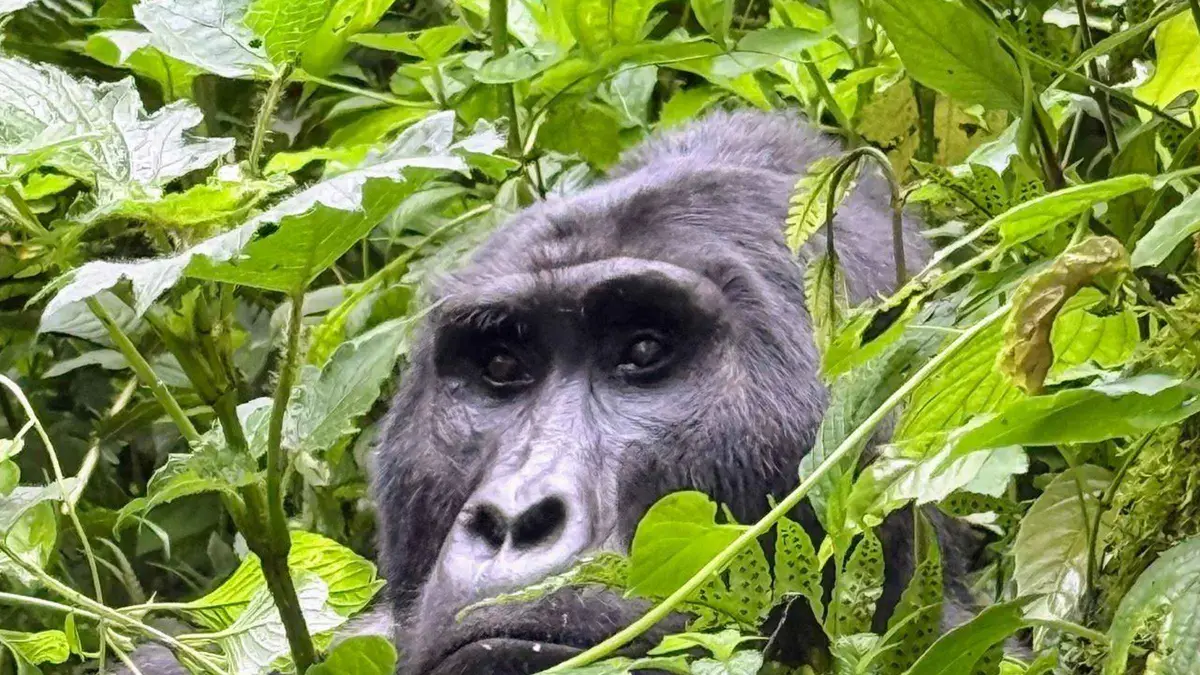
3-Day Uganda Gorilla Trek in Bwindi Forest and Shoebill
A three-day private gorilla trek with Lake Bunyonyi and an optional shoebill trip, permit included, from $2,200 per person.
- Cancellation
- Free cancellation 24h
- Operator
- Antique Safari Adventures
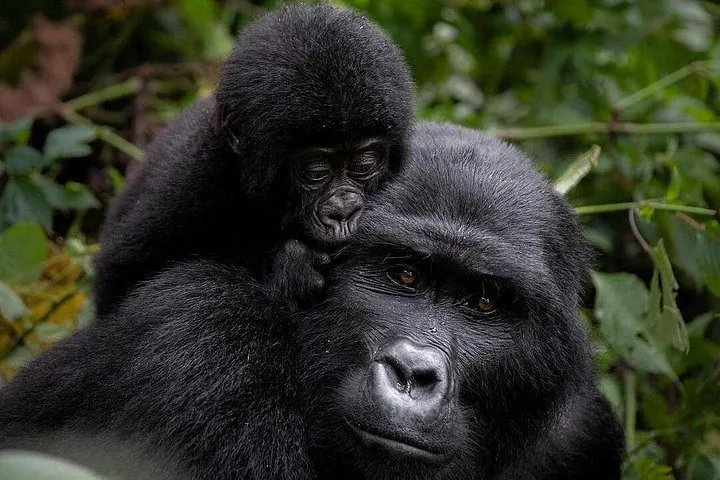
3 Days gorilla trekking Safari tour in Uganda
Private three day Uganda gorilla safari with the permit, two nights lodging, meals, a Batwa tour and a Lake Bunyonyi canoe ride for $2600 per person.
- Cancellation
- Free cancellation 24h
- Operator
- Dav Safaris
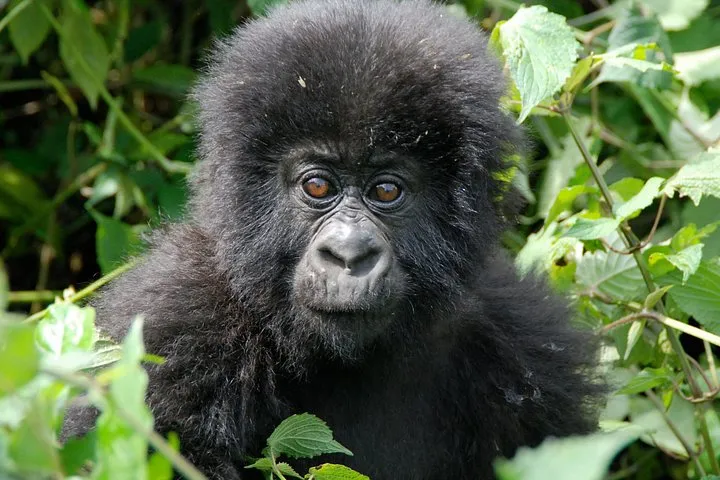
Private 3 Day Gorilla Trekking Safari in Uganda
Private 3 day Uganda gorilla trek with Batwa visit and Equator stop at $1,900 per person, meals included, permit status not stated.
- Cancellation
- Free cancellation 24h
- Operator
- Native Africa Tours
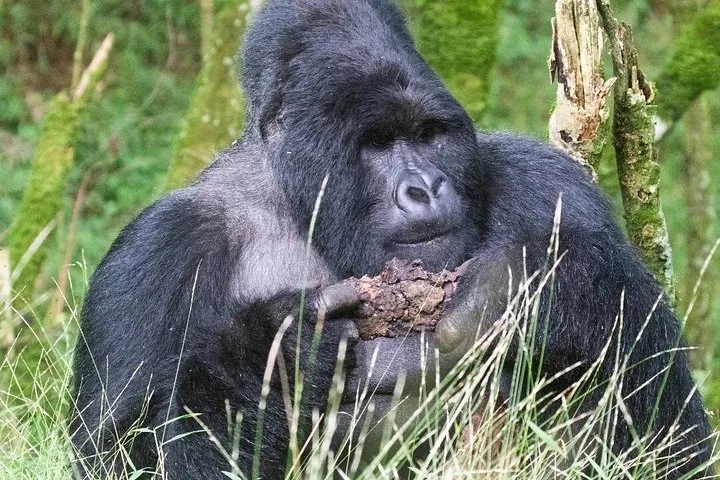
5 Days Uganda Gorilla, Chimpanzee and Wildlife Safari
A 5 day private Uganda safari combining gorilla trekking, chimpanzees and Queen Elizabeth wildlife, with both permits included in the $2,863 per person price.
- Cancellation
- No refund, all sales final
- Operator
- Prime Safaris and Tours Limited
Who can join the habituation experience?
Anyone aged 15 or older with a reasonable fitness level can join.
The age rule and the fitness rule are both hard requirements.
Age and fitness
The minimum age is 15 years old, the same rule Uganda Wildlife Authority applies to standard tracking. A reasonable fitness level is required because locating the family can take 30 minutes or more than 8 hours on steep terrain. You can request a gorilla family to suit your fitness level, so tell your guide honestly how you feel about long hikes before permits are assigned.
Porters are available to carry backpacks and help on the route, and hiring one is money well spent.
Source: Visit Rwanda.
What should you pack and where should you stay?
Pack hiking boots, waterproofs, long sleeves and gloves, and sleep within a short drive of the Rushaga trailhead.
The forest is wet and steep, and an early briefing means the lodge choice matters.
What to pack
Bring hiking boots or sturdy shoes, waterproof clothing, long sleeves and gloves. Nettles and thorny plants make shorts a bad idea. Carry a packed lunch, since locating the family can stretch past midday, plus a camera with no flash, because Uganda Wildlife Authority bans flash photography.
Keep 7 meters, about 22 feet, from the gorillas, wear a facemask as required and leave no waste in the park.
Where to stay
Named lodges near the Rushaga trailhead include Rushaga Gorilla Haven Lodge, Gorilla Safari Lodge, Rushaga Gorilla Camp and Four Gorillas Lodge. Book a lodge that prepares early breakfasts and lunch boxes, because briefing is at 7:30am and the day can run long.
Sources: Visit Rwanda, Uganda Wildlife Authority.
When is the best time to go?
The dry seasons from June to August and December to February are the most comfortable, with temperatures between 20 and 25 degrees Celsius.
Bwindi is a rainforest, so dry months make the trekking easier even though permits are scarcer.
Seasons
Dry seasons run June to August and December to February, which matches the high season when permits should be booked 3 to 6 months ahead. Trails are less slippery in these months and temperatures sit between 20 and 25 degrees Celsius. The wet seasons bring lower permit availability pressure but muddier trails.
Whatever the season, rain is possible on any day in Bwindi, so waterproofs go in the bag year round.
Frequently Asked Questions
What is gorilla habituation experience?
It is a four hour visit with a semi habituated gorilla family in the Rushaga sector of Bwindi, joined alongside rangers and researchers, limited to four visitors per day. Compare it with the standard one hour trek on our rwanda vs uganda gorilla trekking page.
How much is gorilla habituation experience?
The permit costs $1,500 for foreign non residents, $1,000 for foreign residents of Africa and UGX 750,000 for East African citizens, and rises to $1,800 for foreign non residents from 2027, per the Uganda Wildlife Authority tariffs.
How long does gorilla habituation take?
You get four hours with the family on the day. Habituation of a family from scratch takes two to three years of daily visits before it opens to tourists.
Is the gorilla habituation experience worth it?
It is worth it if you want deeper time for photography and behaviour watching and can pay $300 more than a Rwanda permit for four times the contact time. For a first visit on a tighter budget, the standard $800 Bwindi trek is usually the better pick, for example on 3 Day Gorilla Trekking Uganda.
What is included in the permit?
The permit includes rangers and researchers, the guide fee, park entrance fees for the day, a community contribution and up to four hours with the gorillas.
Can I do the habituation experience from Rwanda?
Yes. Rushaga is about a 4 hour drive from Kigali, so most travellers fly into Kigali and cross the border, as on our Bwindi Gorilla Trekking from Kigali trip.
How many people can join each day?
Only four visitors per day and only one group undergoes the process, which is why permits sell out months ahead in high season.
More Guides
- Best Time to Visit Uganda for Gorilla Trekking
Plan the best time to visit Uganda in 2027. Two dry seasons, June to September and December to February, See the month table and book.
- Bwindi Impenetrable National Park: Gorilla Trekking in Uganda Compared With Rwanda
Plan Bwindi in 2027: 4 sectors, treks of 2 to 7 hours, permits and how Uganda compares with Rwanda. See tours and book.
- East Africa Tourist Visa for Gorilla Trekking in Rwanda and Uganda
The East Africa Tourist Visa covers Rwanda, Uganda and Kenya for 90 days in 2027 on one $100 visa. See how to apply for your gorilla trek.