 Rwanda vs Uganda Gorilla Trekking
Home › Guides › Is Gorilla Trekking Safe?
Is Gorilla Trekking Safe?
Yes, deciding if is gorilla trekking safe comes down to the rules, and the rules are strict. Volcanoes National Park limits every habituated family to 8 visitors with armed park guides, a 7 to 10 metre distance and one hour of contact, per the park's published rules.
Quick answer The short answer on safety
Yes, gorilla trekking in Rwanda and Uganda is safe. Each habituated family receives a maximum of 8 visitors escorted by armed park guides, and for over 20 years there has been no security incident in Bwindi and Mgahinga Gorilla Park. The real risks are mud, altitude and your own health, so follow the briefing rules and you will be fine.
Key takeaways
- Compare permits, prices and parks on rwanda vs uganda gorilla trekking before you pick a country.
- Short on time? See the 1 Day Rwanda Gorilla Trekking Tour In The Volcanoes National Park.
- Want two countries in one trip? Look at the 4 Day Rwanda and Uganda Gorilla Trekking itinerary.
- For longer options, browse the 3 Day Gorilla Trekking Rwanda with IMANI TOURS page.
How safe is gorilla trekking?
Gorilla trekking is very safe when you follow the park rules, because the gorillas are habituated, the groups are small and rangers lead every trek.
Safety on a gorilla trek rests on three pillars. The gorillas themselves, the escort system in the parks, and the rules every visitor must accept at the morning briefing. Here is each one.
The gorillas are used to people
Every family you are allowed to visit is habituated, which means the gorillas are used to being around humans. Gorillas are not predatory or aggressive, but they can be defensive around their babies. A silverback is still an enormous animal.
The average adult male can weigh around 180 kg and stand 1.7 m tall, and some sources give a range of 150 to 180 kg. Despite that size, mountain gorillas are gentle and not interested in hurting humans.
| Safety layer | What it means for you |
|---|---|
| Habituation | The family accepts human presence and does not see you as a threat |
| Small groups | A maximum of 8 visitors per habituated gorilla family |
| Armed escorts | All treks are led by armed park guides |
| Time limit | A maximum of one hour face-to-face with the gorillas |
| Distance rule | 7 to 10 metres must be observed at all times |
The escort system inside the parks
In Rwanda all tourists are escorted by armed rangers while tracking, and the country is considered one of the safest in the world. In Uganda a standby military base works with armed rangers and tourism police inside Bwindi and Mgahinga Gorilla Park. Before the trek itself, a rules briefing is conducted at Kinigi before visits in Volcanoes National Park.
You report to the Visitor Information centre at park entry at 07:00 and the briefing at the RDB offices in Kinigi starts at 7:00 AM on the trek day.
| Park | Security set-up |
|---|---|
| Volcanoes National Park, Rwanda | Armed rangers escort every tracking group, briefing at Kinigi |
| Bwindi and Mgahinga, Uganda | Standby military base plus armed rangers and tourism police |
| Virunga, DR Congo | Armed guards and rangers, the park sometimes closes and is not always open to tourists |
Source: Rwanda Development Board.
What are the rules when you are with the gorillas?
The rules are a 7 to 10 metre distance, one hour of viewing, no sick visitors, no drinking, smoking or eating near the gorillas, and no flash, sudden movements or loud noises.
The rules exist to protect you and the gorillas, because a single human illness can pass to a family. Break a rule and the guide will stop you, and in the worst cases a visit can be ended.
The full rulebook
You accept these rules at the briefing, and your guide enforces them on the ground. The distance rule of 7 to 10 metres has a health reason as well as a safety one, because it minimises the spread of infectious human diseases. The Rwanda Development Board portal states the same figure as 7 meters, about 22 feet, from the gorillas.
The Gorilla Friendly Pledge adds three more habits: maintain physical distance, wear a facemask at all times, and leave no waste in the park. Spitting in the park is strictly prohibited.
| Rule | Why it exists |
|---|---|
| Keep 7 to 10 metres away | Minimises the spread of infectious human diseases |
| One hour maximum with the family | Limits stress on the gorillas |
| No tracking if you are sick | Gorillas share about 98% of human DNA and catch human illnesses |
| No drinking, smoking or eating near gorillas | Prevents contact and disease transfer |
| No flash photography, no loud noises, no sudden movements | Avoids startling the family |
| No bright colours or strong perfume | Keeps the encounter calm |
| Facemask at all times and no waste | Gorilla Friendly Pledge health rules |
If a gorilla comes close
Stay submissive and avoid eye contact if a gorilla approaches you. Do not run and do not raise your voice. At times gorillas charge or get irritated by human presence, and visitors must observe the park guide's instructions.
The guide knows the family and will tell you exactly what to do, usually to crouch down and stay still until the animal moves on.
| Situation | What you do |
|---|---|
| Gorilla walks toward you | Stay submissive, no eye contact, follow the guide |
| Mock charge | Follow the park guide's instructions exactly |
| Family feeding or resting | Hold your distance and keep your voice low |
Sources: Rwanda Development Board, Visit Rwanda.
Has anyone ever been injured on a gorilla trek?
The documented record points to no security incidents in Uganda's gorilla parks for over 20 years, while the honest complaint you will find is about a tough, muddy trek rather than an animal attack.
Travellers reading forums want to know about real incidents. Here is what the record actually shows, and what a bad experience looks like in practice.
The incident record
For over 20 years there has been no security incidence in Bwindi and Mgahinga Gorilla Park. A negative first-hand trip review from Bwindi does exist, where a reviewer describes a horrible gorilla trekking experience and argues it was not all magical. The same reviewer acknowledges that trekking is a main reason the animals are kept safe in Bwindi National Park.
So the honest picture is this: the serious risk people imagine, an attack or a security event, does not show up in the record for these parks. The realistic downside is a hard day in the forest and a visit that feels less magical than the photographs suggested. Manage your expectations and the trek will still be worth it, which is why gorilla trekking worth it remains the most common follow-up question here.
Gorilla trekking incidents you can actually control
The incidents worth planning for are small and avoidable. Book with a registered operator, check reviews before you pay, and never send money to individual accounts. Keep about 7 metres from gorillas and follow the guide.
Document doubts can also hurt you in Rwanda, because wrong or false applications can lead to denied entry even with a paid permit, so send supporting documents to the RDB reservation email before the visit.
| Avoidable problem | How you prevent it |
|---|---|
| Unregistered operator | Book with a registered operator and check reviews |
| Payment fraud | Never send money to individual accounts |
| Denied entry in Rwanda | Verify permit documents before the visit |
| A scare at close range | Stay submissive and follow the ranger |
Source: Rwanda Development Board.
Tours That Fit
Guided treks with licensed operators keep you inside the safety system from the briefing to the forest.
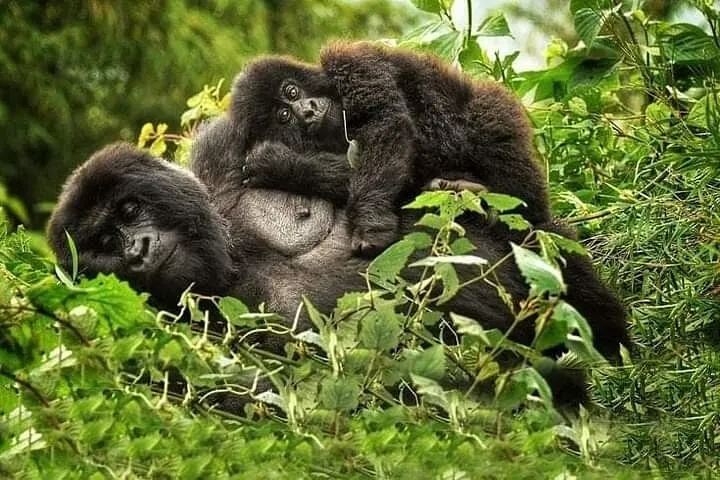
1 Day Rwanda Gorilla Trekking Tour In The Volcanoes National Park
A private 12 hour Kigali day trek with 4x4 transport and meals included, but the mandatory gorilla permit is paid for separately.
- Cancellation
- Free cancellation 24h
- Operator
- Universal Ventures
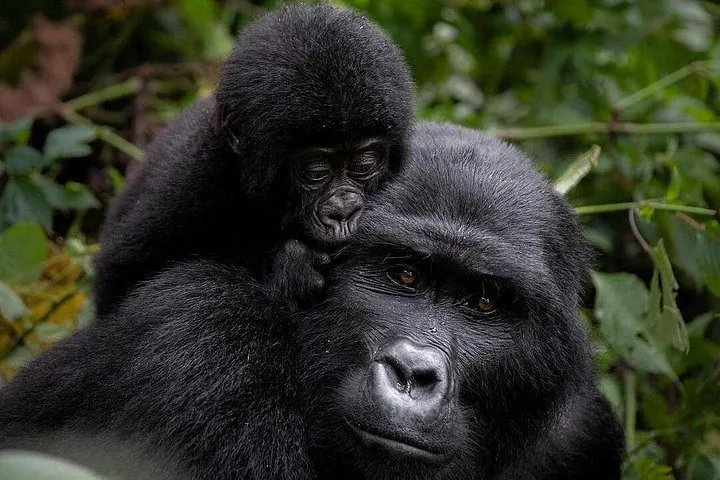
3 Days gorilla trekking Safari tour in Uganda
Private three day Uganda gorilla safari with the permit, two nights lodging, meals, a Batwa tour and a Lake Bunyonyi canoe ride for $2600 per person.
- Cancellation
- Free cancellation 24h
- Operator
- Dav Safaris
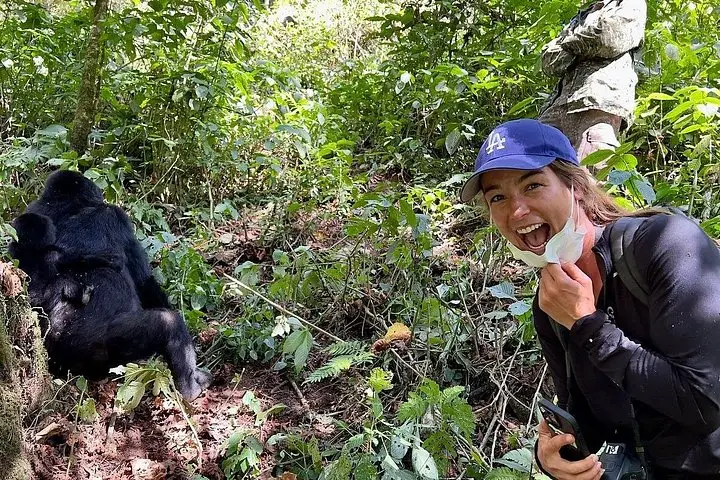
3 Day Uganda Gorilla Trekking and Batwa Pygmies Experience
A private 3 day Uganda gorilla trek with a Batwa cultural experience, permit of $800 included in the $1860 price, from Entebbe or Kampala.
- Cancellation
- Full refund 6 days ahead, 50% between 2 and 6 days, no refund within 2 days
- Operator
- Eco Adventure Safaris
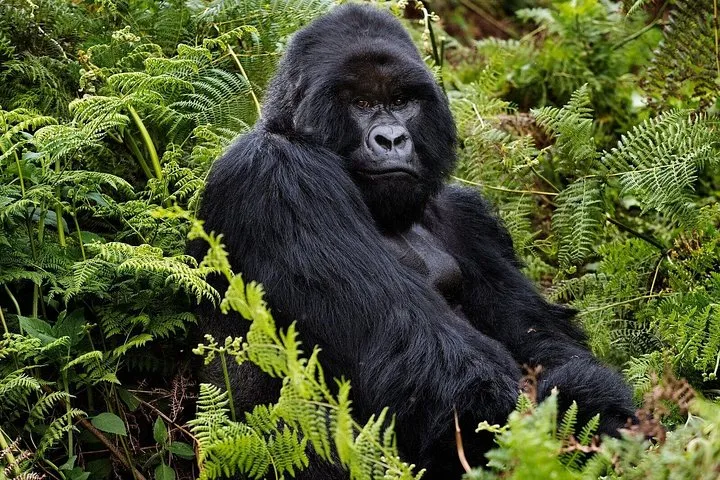
2 Days Gorilla & Golden Monkey Trekking Safaris
Two private treks with canoeing and a lodge night, but the $715 price excludes the gorilla permit while golden monkey permits are included.
- Cancellation
- Free cancellation 3 days
- Operator
- Kingfisher Journeys
Is the trek itself dangerous or just difficult?
The forest is safe but tough, with hikes lasting anywhere from 30 minutes to four or more hours at altitudes of 2,500m to 4,000m.
Most injuries on a gorilla trip, where they happen at all, come from the terrain rather than the animals. Here is what your body should be ready for.
How long and how hard
Gorilla trekking can take from 30 minutes to three quarters of the day, so you need to prepare for both outcomes. In Rwanda the tracking can be between 90 minutes and the whole morning depending on which family group is assigned. Trek length and difficulty vary by park, weather and assigned troop, and you can generally ask to be assigned a troop near or far from the starting point.
Trekking in Volcanoes National Park in Rwanda is usually easier than other parks, though gorilla families sometimes move to higher altitudes and rain makes trails muddy and slippery. Guides will go at a comfortable pace with plenty of breaks if you ask.
| Factor | What to expect |
|---|---|
| Trek duration | 30 minutes to four or more hours, sometimes most of the day |
| Altitude in Rwanda | 2,500m to 4,000m |
| Terrain | Muddy and slippery trails after rain |
| Control | Ask for a family closer to the start or a slower pace |
What to wear and pack
The Gorilla Friendly Pledge recommends hiking boots or sturdy shoes, waterproof clothing, long sleeves and gloves. Gumboots, raincoats and gloves can also be hired at the park headquarters for the Bisoke hike, which is useful if you arrive underprepared. Porters are available to carry backpacks and cameras and help on the route, and hiring one also puts a local income behind conservation.
| Item | Reason |
|---|---|
| Hiking boots or sturdy shoes | Muddy, slippery forest trails |
| Waterproof clothing | Rain at altitude |
| Long sleeves and gloves | Thorny vegetation and nettles |
| Gumboots | Can be hired at park headquarters |
| Porter | Carries your bag and steadies you on the route |
Source: Visit Rwanda.
Can you trek if you feel unwell?
No, visitors who are sick or ill may not track gorillas, because gorillas share about 98% of human DNA and are susceptible to human infectious disease.
The health rules protect the gorillas first, and they also protect you. Know them before you travel so a cold does not cost you a permit.
The sickness ban
The Rwanda Development Board states you must not visit if you are sick with a cold, flu or other contagious illness. This is the rule with the sharpest consequence for travellers, because gorillas catch human diseases easily. Know the money rules too, because illness on the day is not a refund case.
The RDB portal states that no refund is made in case of late arrivals, flight delay, absence or cancellation of trip for any other reason. If the group's movement prevents tracking all day, you get another chance or a full refund, and if you track all day but fail to contact a gorilla family, 75% of the tracking fee is refunded.
| Scenario | Outcome |
|---|---|
| You are ill on trek day | You may not track, permit forfeited |
| Family never found after a full day | 75% of the tracking fee refunded |
| Group movement blocks tracking all day | Another chance or a full refund |
| Late arrival or flight delay | No refund |
Source: Rwanda Development Board.
How safe is gorilla trekking in Uganda compared with Rwanda?
Both are safe, since Uganda and Rwanda are stable countries and both park systems escort tourists with armed rangers, while DR Congo's Virunga is the one option that is not always secure.
This site exists to compare the two countries, so here is the safety verdict side by side for our gorilla trip.
Rwanda, Uganda and Congo head to head
Rwanda is considered one of the safest countries in the world and all tourists are escorted by armed rangers while tracking. Uganda and Rwanda are stable countries, and for over 20 years there has been no security incidence in Bwindi and Mgahinga Gorilla Park. Virunga National Park in Congo is not always secure and open to tourists, visitors are escorted by armed guards and rangers, and the park sometimes closes.
On physical difficulty, trekking in Volcanoes National Park in Rwanda is usually easier, while Bwindi's terrain varies more by trailhead. Check the Bwindi Gorilla Trekking from Kigali route if you want Uganda's forest with a Rwanda start.
| Country | Security record | Trek difficulty |
|---|---|---|
| Rwanda | Armed rangers escort all tourists, one of the safest countries in the world | Usually easier, families sometimes at higher altitude |
| Uganda | No security incidence in Bwindi and Mgahinga for over 20 years, standby military base with rangers and tourism police | Varies by park, weather and assigned troop |
| DR Congo | Virunga is not always secure and open, sometimes closes | Not stated |
Who should think twice before booking?
Anyone under the minimum age of 15 years cannot track gorillas in Rwanda, and anyone with limited mobility or a respiratory condition should plan the easiest possible trek.
The safety rules have a few hard edges. Check them against your group before you pay for permits.
Age, fitness and group size
The minimum age for gorilla tracking in Rwanda is 15 years, and a maximum of 8 visitors per group is allowed. Only 96 gorilla permits are issued daily in Rwanda, eight per troop per day, so book early to control your family assignment. If altitude worries you, remember the hike happens at 2,500m to 4,000m in Rwanda.
Ask for a family near the trailhead, request a comfortable pace with plenty of breaks, and hire a porter. On the money side, rescheduling a confirmed permit carries a processing fee of 20% of the application fee, approved automatically more than 7 days before the visit and subject to RDB approval within 7 days.
| Constraint | The rule |
|---|---|
| Minimum age | 15 years |
| Visitors per family | 8 maximum |
| Daily permits in Rwanda | 96, eight per troop |
| Reschedule fee | 20% of the application fee |
| Reschedule notice | Automatic beyond 7 days, RDB approval within 7 days |
Sources: Rwanda Development Board, Visit Rwanda.
Is it safe to go gorilla trekking in Rwanda right now?
Yes, and the safety rules double as the conservation funding that keeps the parks secure, since permit fees fund anti-poaching efforts including park guardians and awareness campaigns.
The same rules that keep you safe keep the gorillas alive. Your permit money is part of the security system.
Your permit funds the guards
Permit fees fund conservation initiatives and anti-poaching efforts including park guardians and awareness campaigns. In Rwanda, 10% of permit revenue goes to local communities, which is why the reviewer at Bwindi acknowledged that trekking is a main reason the animals are kept safe. The current Rwanda permit price for a foreign non-resident is $1,500.00 per person per day according to the RDB portal, and the Gorilla Friendly Pledge asks you to wear a facemask at all times and leave no waste.
Follow those two lines and your visit is both safe and ethical. If you want to see how the day runs before committing, the Gorilla Trekking Day Trip From Kigali page shows the shortest possible itinerary.
Sources: Visit Rwanda, Rwanda Development Board.
Safety questions travellers ask
Is gorilla trekking safe?
Yes. Habituated families receive a maximum of 8 visitors led by armed park guides, with a 7 to 10 metre distance and one hour of viewing. Start with the comparison on rwanda vs uganda gorilla trekking to pick your park.
Has anyone ever been injured on a gorilla trek?
No security incident has occurred in Bwindi and Mgahinga Gorilla Park for over 20 years, and the negative accounts you will find describe tough, muddy treks rather than animal attacks.
Is it safe to go gorilla trekking in Rwanda right now?
Yes, Rwanda is considered one of the safest countries in the world and all tourists are escorted by armed rangers while tracking in Volcanoes National Park.
How safe is gorilla trekking in Uganda?
Very safe. A standby military base works with armed rangers and tourism police inside Bwindi and Mgahinga, and there has been no security incidence there for over 20 years.
How many men would it realistically take to beat a gorilla?
The question never comes up on a trek because you never fight a gorilla. An adult silverback can weigh 180 kg and stand 1.7 m tall, so the safety plan is distance, submission and your ranger, never confrontation.
Is it safe to track gorillas in Virunga National Park Congo?
Not always. Virunga is not always secure and open to tourists, visitors are escorted by armed guards and rangers, and the park sometimes closes.
Can a tour operator make the trek safer?
Yes. Book with a registered operator, check reviews, and never send money to individual accounts. For example the 3 Days gorilla trekking Safari tour in Uganda runs the whole day inside the official park system for $2,600 per person.
What happens if a gorilla charges?
At times gorillas charge or get irritated by human presence, and visitors must observe the park guide's instructions, staying submissive without eye contact until the animal moves on.
More Guides
- Best Time to Visit Uganda for Gorilla Trekking
Plan the best time to visit Uganda in 2027. Two dry seasons, June to September and December to February, See the month table and book.
- Bwindi Impenetrable National Park: Gorilla Trekking in Uganda Compared With Rwanda
Plan Bwindi in 2027: 4 sectors, treks of 2 to 7 hours, permits and how Uganda compares with Rwanda. See tours and book.
- East Africa Tourist Visa for Gorilla Trekking in Rwanda and Uganda
The East Africa Tourist Visa covers Rwanda, Uganda and Kenya for 90 days in 2027 on one $100 visa. See how to apply for your gorilla trek.